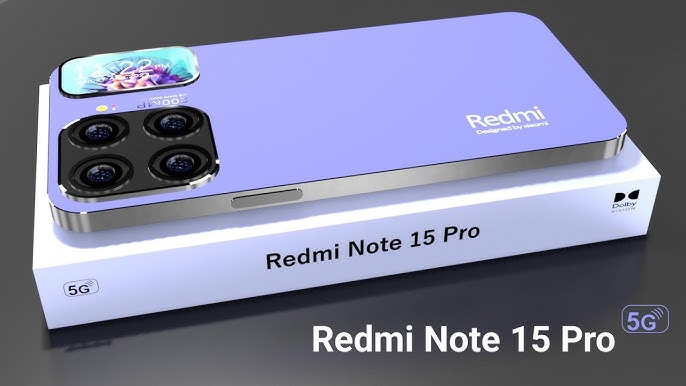
What is Redmi?
- Origins: Launched July 2013 as a budget smartphone line within Xiaomi, Redmi became an independent sub-brand on January 3, 2019, to manage entry- and mid‑range devices separately from Xiaomi’s flagship line.
- Product lineup: Ranges from ultra‑budget (Redmi A) and entry‑level (Redmi) to popular mid‑range (Redmi Note) and premium mid‑range (Redmi K) devices . Beyond phones, Redmi now offers laptops, TVs, power banks, routers, earbuds, washing machines, and more .
2. Redmi’s Market Reach & Impact
- Sales volumes:
- Redmi Note 4: Over 20 million units globally, with ~9.6 million sold in India in 2017 alone
- Redmi Note series: Surpassed 200 million cumulative shipments by April 2021
- Strategic significance: Redmi’s affordability and solid specs have been key to Xiaomi’s success in emerging markets like India, Latin America, and Africa .
- Brand performance: Despite Xiaomi’s overall contraction in market share (e.g., India Q1 2025: ~13% vs 19% in Q1 2024), Redmi remains prominent in search trends and segment dominance in budget categories .
3. Redmi’s Business Strategy
- Cost-effective design: Uses less expensive components, consolidated online/offline sales model, and software (MIUI ads, services) to preserve low pricing while maintaining thin hardware margins .
- Transition to quality over quantity: Xiaomi India is streamlining its Redmi portfolio—cutting models from 28 to 10—focusing on high-impact, premium devices in the Rs 20,000+ range to improve margins .
- Premium drift: Redmi K‑series and Note‑series in China are inching into higher-end territory, featuring enhanced cameras and Leica co-branding.
4. Redmi within Xiaomi’s Financials
- Xiaomi corporate figures:
- Market cap: Around $137 billion as of February 2025 .
- FY 2023 revenue: ~$38 billion, with adjusted net profit ~$2.7 billion—over 126% YoY increase .
- Smartphone revenue: ~$21.8 billion in 2023—about 60% of total revenue .
- Redmi’s share: While Xiaomi doesn’t break out brand-specific revenue, Redmi drives most of the smartphone volume and dominates budget segment shipments. The sub‑brand strategy (including POCO) underpins Xiaomi’s global position reddit.com.
- IoT & services complement: Xiaomi’s diverse revenues—from smart-home products and internet services—help sustain low margins on Redmi devices .
5. Challenges & Path Forward
- Pricing vs value: Some markets (especially India) have noted Redmi’s Note‑11/12/13 models becoming overpriced compared to flagship aspirations, leading to market share pressure .
- Shifting focus: Xiaomi’s deliberate shift to profitability over sheer volume is reflected in Redmi aiming for better value, fewer SKUs, and higher-end offerings .
- Future outlook: Redmi’s expansion into TVs, laptops, home appliances, and IoT aims to leverage Xiaomi’s ecosystem. Coupled with Xiaomi’s entry into chip design (3 nm), EVs, and smart home, it’s part of a broader strategy to grow revenue and net worth beyond smartphones .
Final Take
Redmi is more than a sub‑brand—it’s a strategic pillar in Xiaomi’s value-driven ecosystem. Its budget-first roots helped establish Xiaomi’s global smartphone presence and feed into larger corporate ambitions. While rising prices and market saturation present challenges, Redmi continues evolving toward premium mid‑ranges, expanding into adjacent categories, and reinforcing Xiaomi’s declining margins with scale and ecosystem synergy.
For Xiaomi, Redmi isn’t just volume—it’s the engine that helped grow a net worth of over $137 billion and diversified revenues beyond mobile. The future lies in balancing value, profitability, and innovation across hardware and software platforms.
 business works
Leave a comment