The Indian Space Research Organisation (ISRO) stands as a symbol of India’s technological aspirations and scientific prowess. Since its humble beginnings in the 1960s, ISRO has evolved into one of the world’s leading space agencies, known for its cost-effective missions, innovation, and commitment to peaceful space exploration.
Origins and Early Vision
ISRO was officially formed on August 15, 1969, succeeding the Indian National Committee for Space Research (INCOSPAR), which was established in 1962 under the guidance of Dr. Vikram Sarabhai — regarded as the father of India’s space program. Sarabhai envisioned using space technology to drive national development, particularly in areas like agriculture, education, and communication.
India’s first foray into space came in 1963, when a sounding rocket was launched from the Thumba Equatorial Rocket Launching Station (TERLS) in Kerala. This marked the beginning of India’s long-term ambitions in space.
1970s–1980s: Establishing the Foundation
During the 1970s and 1980s, ISRO focused on developing indigenous satellite and launch vehicle capabilities.
- In 1975, India launched its first satellite, Aryabhata, from the Soviet Union.
- The first successful launch of an Indian-made rocket, SLV-3, came in 1980, placing the Rohini Satellite (RS-1) into orbit. This made India the sixth country capable of launching satellites using its own rockets.
These early successes laid the groundwork for more sophisticated systems in communication (INSAT series) and remote sensing (IRS series), both of which played key roles in national development.
1990s–2000s: Growth and Diversification
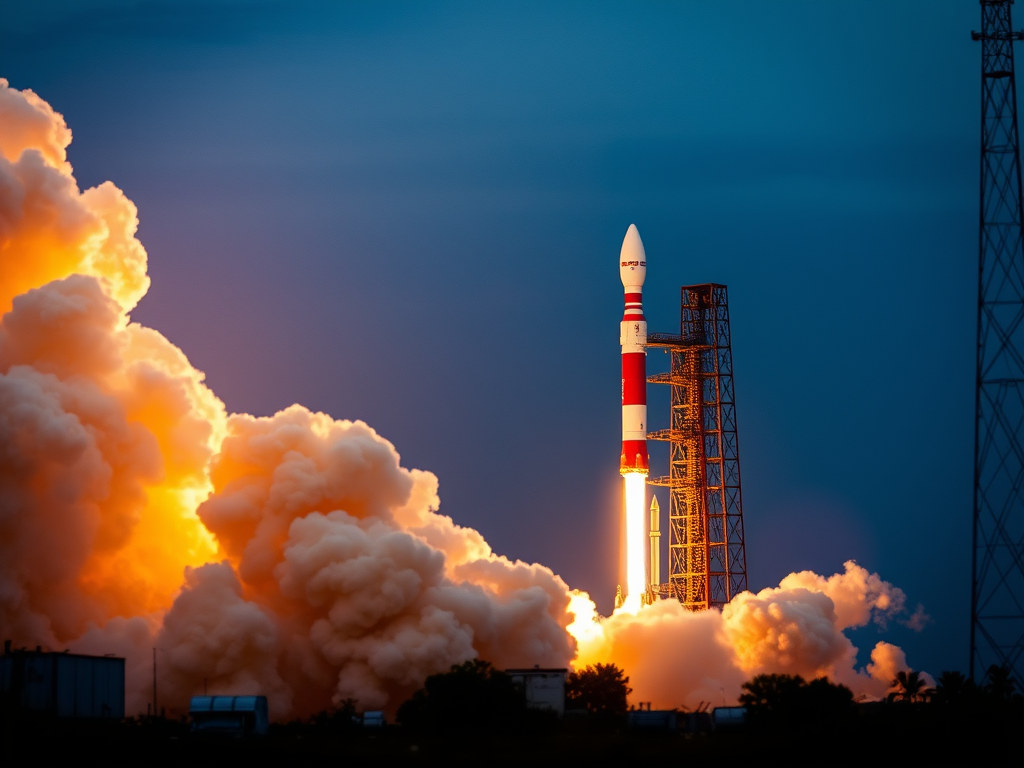
The 1990s saw ISRO transition into a more mature agency, marked by regular satellite launches and improved launch vehicle capabilities like the Polar Satellite Launch Vehicle (PSLV) and Geosynchronous Satellite Launch Vehicle (GSLV).
- PSLV became a workhorse, launching satellites into polar and sun-synchronous orbits.
- ISRO also launched several INSAT and IRS satellites, strengthening India’s capabilities in weather forecasting, disaster management, and natural resource mapping.
In 2001, the GSLV made its maiden flight, aimed at launching heavier payloads into geostationary orbits.
2008: Chandrayaan-1 – India Reaches the Moon
ISRO entered deep space exploration with Chandrayaan-1, its first lunar mission launched in October 2008. It made global headlines by discovering water molecules on the Moon’s surface, a major scientific breakthrough. This success established India as a serious player in space science.
2013–2014: Mars Orbiter Mission (Mangalyaan)
Perhaps ISRO’s most iconic mission to date, Mangalyaan (Mars Orbiter Mission) was launched in 2013 and successfully entered Mars orbit in 2014. Remarkably, it was accomplished on a modest budget of around $74 million — the lowest-cost Mars mission ever — earning admiration worldwide for its frugality and efficiency.
Recent Milestones and Future Plans
In recent years, ISRO has expanded its portfolio with increasingly complex missions:
- Chandrayaan-2 (2019): A partial success, with the orbiter functioning well but the lander losing contact during descent.
- Chandrayaan-3 (2023): Successfully soft-landed on the Moon, making India the fourth country to achieve this feat and the first to land near the lunar south pole.
- Aditya-L1 (2023): India’s first solar mission, launched to study the Sun’s outer layers.
- Gaganyaan Mission: India’s first manned space mission, aiming to send astronauts (Gagannauts) to low-Earth orbit, is currently under development.
ISRO is also collaborating on international projects, expanding its commercial satellite launch services, and exploring plans for interplanetary missions, including Venus and more Mars missions.
Conclusion
ISRO’s journey from launching small sounding rockets to executing complex lunar and interplanetary missions is a testament to India’s scientific ingenuity and perseverance. With a focus on affordability, innovation, and inclusive growth, ISRO not only strengthens India’s global standing in space exploration but also demonstrates how space technology can serve humanity.
As ISRO continues to reach for the stars, it remains deeply rooted in the vision of using space as a tool for national development and global cooperation.
 business works
Leave a comment