The Indian Navy, one of the most formidable maritime forces in the world, is a key pillar of India’s defence strategy and a crucial instrument of its foreign policy. As the world’s fifth-largest navy, the Indian Navy plays a vital role in safeguarding national interests, ensuring maritime security, and maintaining stability across the vast Indian Ocean Region (IOR).
Historical Legacy and Modern Evolution
The roots of the Indian Navy date back to the 17th century with the establishment of the East India Company’s Marine. However, the modern Indian Navy was formally established post-independence in 1947. Since then, it has undergone remarkable transformation—from a modest coastal defence force to a blue-water navy capable of projecting power far beyond its shores.
Fleet Strength and Capabilities
As of 2025, the Indian Navy boasts an impressive inventory of surface combatants, submarines, and aviation assets. Key components of its naval power include:
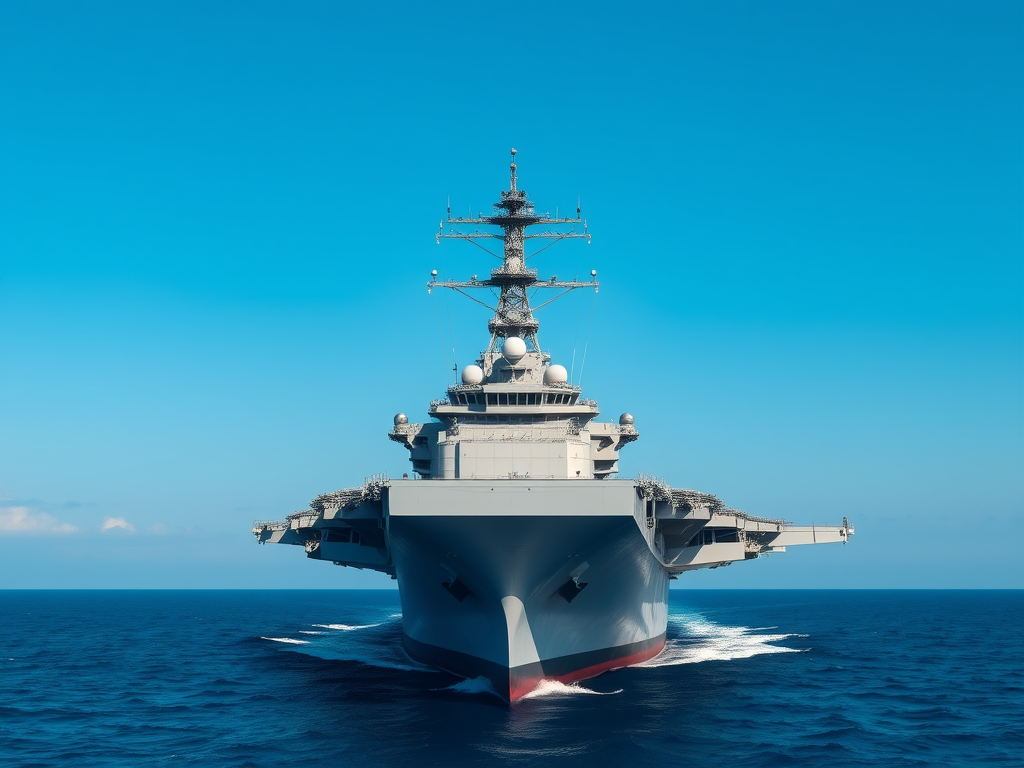
Aircraft Carriers
- INS Vikramaditya: A modified Kiev-class carrier from Russia, serving as the flagship.
- INS Vikrant (IAC-1): India’s first indigenous aircraft carrier, commissioned in 2022, symbolizes self-reliance in defence manufacturing.
Destroyers and Frigates
- The Kolkata-class and Visakhapatnam-class destroyers, armed with advanced radar, BrahMos missiles, and stealth features.
- Shivalik-class stealth frigates, showcasing India’s capabilities in ship design and construction.
Submarine Fleet
- Scorpene-class (Kalvari-class) submarines: Diesel-electric subs built under Project 75 in partnership with France.
- INS Arihant, India’s first nuclear-powered ballistic missile submarine (SSBN), forms the sea-based leg of India’s nuclear triad.
Naval Aviation
- A mix of MiG-29K carrier-based fighters, P-8I Poseidon maritime patrol aircraft, and MH-60R Seahawks enhance surveillance and strike capabilities.
Strategic Presence in the Indo-Pacific
India’s geographic position gives it a commanding role in the IOR. The Navy conducts regular patrols, joint exercises, and humanitarian missions across this vital maritime domain. Key strategic initiatives include:
- Mission SAGAR (Security and Growth for All in the Region): A maritime diplomacy and disaster-relief outreach.
- QUAD Naval Exercises (Malabar): Joint drills with the U.S., Japan, and Australia to ensure freedom of navigation and maritime security.
- Anti-Piracy and Maritime Security Operations: Regular deployments in the Gulf of Aden and Western Indian Ocean.
Self-Reliance and Indigenous Development
Driven by the “Make in India” initiative, the Indian Navy is increasingly focusing on indigenization. Around 60-70% of its fleet is now built domestically. Future programs like Project 75 Alpha (nuclear submarines) and IAC-2 (INS Vishal) aim to further enhance self-sufficiency.
Future Outlook
The Indian Navy is on track to become a 200-ship force by the early 2030s. With investments in unmanned systems, artificial intelligence, and integrated command-and-control, it is preparing for modern hybrid warfare. Its expanding role in regional security frameworks also signifies India’s growing geopolitical stature.
Conclusion
The Indian Navy is not just a warfighting force—it is a symbol of national pride, resilience, and ambition. As India rises as a regional and global power, its navy remains at the forefront, securing its maritime interests and contributing to peace and stability in an increasingly turbulent world.
 business works
Leave a comment